
Posts

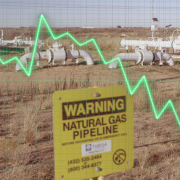
Energy Transfer has announced its plans to expand the Transwestern Pipeline to reach new demand in the US Southwest for natural gas.

Desert Southwest Expansion approved, adding new natural gas capacity across the US Southwest

The United States has become the backbone of the international gas industry as the nation produces more natural gas than any other country on the planet. For decades, the substantial basins in the US have provided US energy companies with the means to develop astonishing levels of output capacity from fields such as the prolific Permian and Delaware basins. Energy Transfer, a mainstay of the US energy market, has announced its plans to expand the Transwestern Pipeline to reach new demand in the US Southwest for natural gas.

Energy Transfer approves the planned expansion of its gas pipeline in the US

The firm has been operating in the prolific Permian basin since 1960, and following decades of operations, now boasts one of the most substantial energy infrastructure portfolios in the US. Energy Transfer has over 140,000 miles of pipeline and associated energy infrastructure in an energy network that spans across 44 US states.

Click here to read the full article
Source: Energies Media

If you have any questions or thoughts about the topic, feel free to contact us here or leave a comment below.
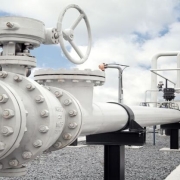
The development of gas processing plants and a pipeline opening in the Permian Basin are expected to give crude producers a boost in the second half of 2024.

Expanding gas processing capacity may increase Permian crude

Crude production is about to pick up in the Permian Basin, analysts say.

Permian players are expanding gas processing and takeaway capacity in the basin—an indication of plans to ramp up crude production over the next two years, according to analysts tracking the region.

Permian crude production has flattened since February, staying within striking distance of 6 MMbbl/d since last fall, according to a study by analytical firm RBN Energy. Consolidation, capital discipline and a lack of natural gas takeaway capacity have led E&Ps to keep production relatively steady.

Click here to read the full article
Source: Hart Energy

If you have any questions or thoughts about the topic, feel free to contact us here or leave a comment below.
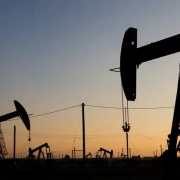
Despite the Biden administration's ambitious climate goals, the oil & gas industry in the US has seen unprecedented growth and profitability.

US oil and gas companies profits skyrocket as the US becomes the energy supplier of choice

Despite the Biden administration’s ambitious climate goals, the oil and gas industry in the United States has seen unprecedented growth and profitability. The top 10 listed oil and gas producers in the US have reported a combined net income of $313 billion in the first three years of President Biden’s term (Financial Times), this is three times the $112 billion generated during the same period under President Trump.

This surge in profitability can be attributed to several factors, including record-high production levels as well as significant cost reduction particularly in the oil rich Gulf of Mexico. In December 2023, US oil production reached 13.5 million barrels per day, surpassing all previous records. According to the US Energy Administration, by 2024 the US will reach the daily production of 14 million barrels per day. Additionally, natural gas production exceeded 105 billion cubic feet per day for the first time. These achievements have solidified the US as a global energy leader, with the country now ranking as the second-largest exporter of crude oil and the largest exporter of liquefied natural gas (LNG), overtaking Qatar.

Click here to read the full article
Source: FX Street

If you have any questions or thoughts about the topic, feel free to contact us here or leave a comment below.
The Texas Electricity Supply Chain Map now includes more information that will assist state emergency officials during disasters.

Texas regulators unveil new oil, gas, utility infrastructure map to assist during extreme weather

According to a jointly-released statement from the Railroad Commission of Texas and the Public Utility Commission of Texas, the Texas Electricity Supply Chain Map now includes more information that will assist state emergency officials in preparing for, responding to and recovering from weather emergencies or other disasters.

The map was created in April 2022, and has successfully been used by state emergency officials during weather emergencies including severe storms last winter season. It’s a crucial tool used by the Public Utility Commission of Texas (PUCT), the Railroad Commission (RRC), and state emergency responders to respond to issues in real-time through direct communication and movement of resources necessary for maintenance or repair of electric generation and transmission infrastructure during an emergency.

The map has more than 12,746 facilities, including electricity generation plants powered by natural gas, electric substations, natural gas processing plants, underground gas storage facilities, oil and gas well leases, saltwater disposal wells. It also has more than 21,000 miles of gas transmission pipelines and approximately 60,000 miles of electric transmission lines;

Click here to read the full article
Source: World Oil

If you have any questions or thoughts about the topic, feel free to contact us here or leave a comment below.